
EFCO Maschinenbau GmbH
About us
EFCO Maschinenbau GmbH has been developing and manufacturing machines and systems for valve repair, valve testing, and flange machining since 1978. Based in Dueren, Germany, the family-owned company stands for durable equipment, reliable performance, and practical solutions for demanding industrial applications.
The product portfolio includes valve test benches, lapping and grinding machines, and portable flange facing, boring and milling solutions. All core systems are engineered and manufactured in Germany, with a strong focus on precision, long service life, and user-friendly operation.
EFCO supports customers in the petrochemical, oil and gas, chemical processing, and power generation industries. Its machines are used wherever process reliability and tight shut-off are essential, whether in workshops, maintenance environments, or critical plant operations.
With subsidiaries in the USA and China, a joint venture in India, and an established presence in the Middle East, EFCO provides close support to customers across key international markets. Regional accessibility through www.efco-me.com further reflects EFCO’s commitment to customers in the Middle East. The company is ISO 9001 certified.
Address
Otto-Brenner-Str. 7
52353 Düren
Germany
E-mail: welcome@efco-dueren.de
Phone: +49 2421 9890
Internet: www.efco-dueren.de
Contact person:
Deniz Kutschke
Regional Sales Manager Middle East
E-mail: sales@efco-me.com
Phone: +49 151 15557144
Products & Services
EFCO Maschinenbau GmbH specialises in valve sealing surface machining, valve testing, and flange processing — built to last. The product range includes valve test benches, portable lapping and grinding machines, as well as portable boring and milling machines and flange facers, all developed and manufactured in Dueren, Germany.
EFCO machines are deployed wherever valves must seal reliably: in refineries, offshore installations, chemical plants, and power stations. The company combines robust engineering with intuitive operation — machines built for tough environments that operators can master quickly and safely.
EFCO Valve Testing Technology
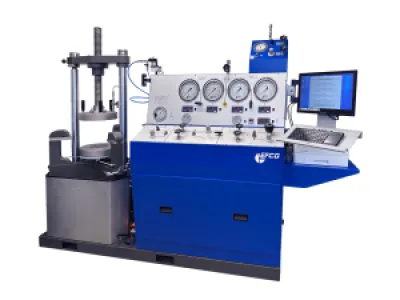
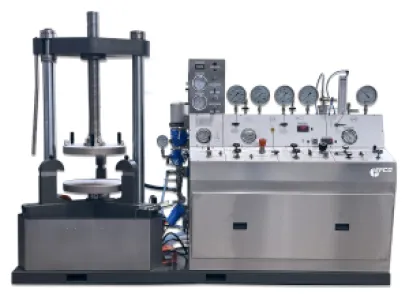
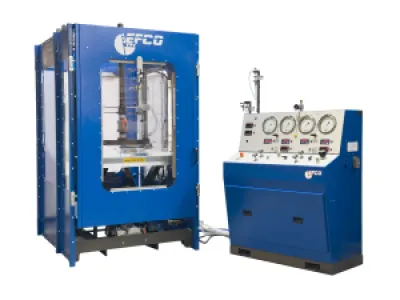
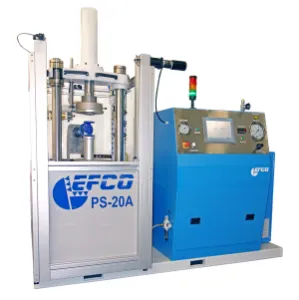
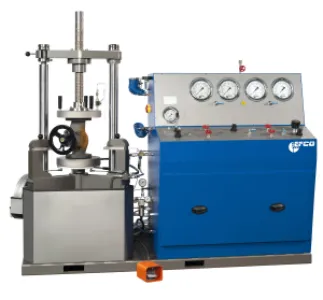
EFCO designs and manufactures modular valve test benches for the pressure testing of shut-off valves, safety valves, ball valves, butterfly valves, check valves, and hollow bodies such as pump casings, motor housings, and pipe fittings.
The standard programme covers nominal diameters from DN 10 to DN 1000 with clamping forces from 5 to 550 tonnes, available in vertical and horizontal configurations. Test pressures reach up to 1,380 bar (20,000 psi) with water and up to 300 bar (4,350 psi) with air or nitrogen. Vacuum testing is also available. All end connection types are supported.
EFCO test benches are available as manual, semi-automatic, or fully automatic systems and can be configured as stationary workshop installations or transportable units for field deployment.
All test benches are equipped with optional hydrogen leak detection connections, making them suitable for testing valves destined for hydrogen service.
VALVE-DOC, the integrated documentation software, records, evaluates, and documents all test results digitally and is compatible with all EFCO test benches, available in multiple languages.
Beyond the standard range, EFCO engineers custom test bench solutions tailored to specific customer requirements, from specialized clamping systems to fully automated test cycles with network data output.
EFCO Mobile Workshops — Your Valve Workshop, Wherever You Need It
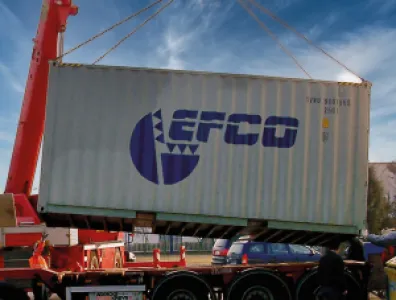
EFCO Mobile Workshops are turnkey container workshops designed to bring comprehensive valve maintenance, repair, and testing capabilities directly to the operational site. Built on decades of international experience in valve service, these self-contained units minimise downtime by eliminating the need to transport valves to a central workshop.
Available in 20-foot and 40-foot standard containers as well as a compact 10-foot version for safety valve testing, each Mobile Workshop is individually configured to meet the specific requirements of the deployment environment.
The intelligently designed layout divides the container into a front compartment for repair, testing, and machining operations, and a rear compartment for secure storage of high-pressure cylinders, compressors, and essential utilities.